Replacing your roof is one of the biggest decisions you’ll make as a North Georgia homeowner. Most people see it as a painful expense and put it off as long as possible. But here’s what many don’t realize: a new roof delivers real, measurable returns in property value, energy savings, storm protection, and insurance costs. We’ve seen it firsthand across hundreds of homes in Paulding, Cherokee, Cobb, and surrounding counties. This article walks you through six clear advantages backed by data and local experience, so you can make a confident, informed decision.
Table of Contents
- Boosting your home’s value and resale power
- Maximizing protection against storms and weather threats
- Improving energy efficiency and reducing bills
- When is roof replacement better than repair?
- How roof replacement affects insurance and resale speed
- Why most homeowners underestimate the ROI of a new roof
- Ready to protect your home? Take the next step
- Frequently asked questions
Key Takeaways
| Point | Details |
|---|---|
| Higher home value | Roof replacement can add up to 68% of its cost back at resale and attracts more buyers. |
| Superior storm defense | A new roof boosts protection against hail, leaks, and weather damage with advanced materials. |
| Lower energy bills | Modern roofs with reflective options and better insulation help cut your energy costs year-round. |
| Knowing when to replace | Replacing is best if your roof is over 25% damaged or past 75% of its expected lifespan. |
| Faster sale & lower insurance | Homes with new roofs sell faster and often qualify for lower insurance rates. |
Boosting your home’s value and resale power
A new roof is one of the most powerful upgrades you can make before selling your home, or even just to build long-term equity. Many North Georgia homeowners are surprised to learn how directly it affects their bottom line.
According to industry data, you can recoup 52 to 68% of your roof replacement cost at resale. That’s a meaningful return on a major home improvement. Compare that to other upgrades like bathroom remodels or new flooring, which often return far less and take much longer to impress buyers.
Stat callout: Homes with newer roofs are perceived as lower risk and move-in ready, which translates directly into buyer interest and competitive offers.
Here’s why buyers respond so strongly to a new roof:
- No negotiating leverage for the buyer. A worn or aging roof gives buyers a reason to demand price cuts. A new one removes that bargaining chip completely.
- Faster sale timelines. Homes with recent roof installations tend to spend less time on the market, particularly in competitive North Georgia neighborhoods.
- Stronger curb appeal. New shingles, clean ridgelines, and fresh flashing all contribute to a home’s first impression. That visual impact matters.
- Inspection confidence. Buyers and their agents feel reassured when the roof is new. Fewer red flags mean smoother closings.
If you’re weighing your options before selling, reading our roof restoration guide is a good place to start. And don’t underestimate how much roof cleaning safeguards value when preparing for a sale or appraisal.
Maximizing protection against storms and weather threats
Besides adding value, a new roof is your front line of defense when North Georgia’s weather turns rough. This region sees serious storms, high winds, heavy rain, and hail every year. An aging roof is not built to handle that.
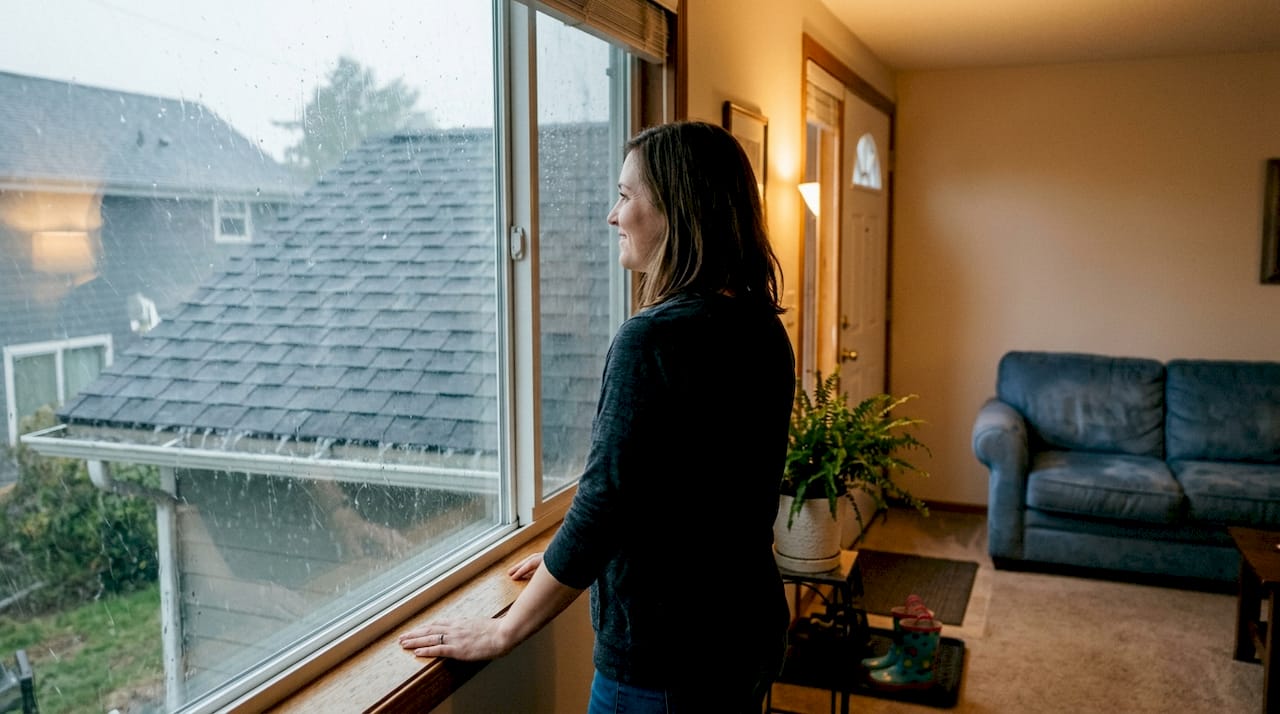
A full tear-off replacement does more than swap out old shingles. It allows your contractor to inspect and repair deck rot or delamination that’s hiding underneath. That’s damage you simply cannot address with a patch job. New installations also reset the underlayment, flashing, and ventilation to current building code standards, including UL 2218 Class 4 shingles that are specifically rated for hail resistance.
Pro Tip: Ask your contractor whether they’re installing impact-resistant shingles rated UL 2218 Class 4. These cost a little more upfront but can save you significantly on insurance premiums and future repairs.
Here’s what a proper replacement adds to your home’s storm defenses:
- Repaired roof deck. Rot and soft spots are fixed before new materials go on, giving you a solid foundation.
- Updated flashing. Properly sealed valleys, eaves, and penetrations prevent water infiltration at the most vulnerable points.
- Code-compliant ventilation. Balanced airflow prevents moisture buildup that accelerates shingle aging from the inside out.
- Impact-rated shingles. Modern materials absorb hail energy instead of cracking, dramatically reducing post-storm damage.
If you’ve recently experienced storm damage, review our storm-damage repair steps or learn how to navigate insurance for roof storms in Georgia.
Improving energy efficiency and reducing bills
Beyond storm protection, a replacement can trim your energy bills for years to come. Georgia summers are brutal, and your roof plays a bigger role in your home’s temperature than most people expect.
Older roofs trap heat in the attic, forcing your HVAC system to work overtime. A new roof, combined with fresh insulation and proper ventilation, changes that equation entirely. You can also add reflective coatings during replacement. These coatings save 10 to 30% on energy costs and add 10 to 15 years of life to your roof at roughly $0.75 to $3.00 per square foot.
Pro Tip: If your attic runs extremely hot in summer, ask about ridge vent and soffit vent upgrades at the same time as your replacement. Proper airflow is often the missing piece for real energy savings.
| Upgrade option | Estimated savings | Added lifespan |
|---|---|---|
| Reflective roof coating | 10 to 30% on energy costs | 10 to 15 years |
| Improved attic insulation | 15 to 25% on HVAC costs | N/A |
| Ventilation upgrade | Reduces heat buildup | Extends shingle life |
| Full tear-off replacement | Resets all systems | 25 to 50 years |
Modern shingles are also engineered with reflective granules that reduce solar heat gain. It’s a small design detail that makes a real difference when your home is baking under a July sun in North Georgia.
When is roof replacement better than repair?
Even with all these advantages, knowing when full replacement beats a repair is key. Many homeowners default to repairs because the upfront cost is lower. That logic doesn’t always hold.
The National Roofing Contractors Association recommends replacement if more than 25% is damaged or if your roof has reached 75 to 80% of its expected design life. For standard asphalt shingles, that lifespan is 20 to 50 years depending on the product. If your roof is 20 years old and showing problems in multiple areas, repairs are likely just delaying the inevitable.
Here’s a clear comparison to guide your decision:
| Scenario | Recommended action |
|---|---|
| Isolated damage, roof under 15 years | Repair |
| Widespread damage over 25% of roof | Full replacement |
| Roof at or past 80% of lifespan | Full replacement |
| Multiple repairs in recent years | Full replacement |
| Storm damage with insurance claim | Replacement (often covered) |
When replacement makes the most sense, follow this process:
- Get a professional inspection. Don’t guess at damage scope. A licensed contractor identifies what’s visible and what’s hidden.
- Check your insurance policy. Age and damage percentage directly affect coverage eligibility.
- Compare repair vs. replacement costs over five years. Multiple repairs on an aging roof typically exceed replacement costs.
- Choose materials for your climate. North Georgia’s mix of heat, humidity, and hail means material selection matters a lot.
- Request a same-day or fast estimate. You can explore fast roof estimate solutions to move quickly when timing is critical.
For more context and updates, browse our roofing insights blog for local tips and seasonal guidance.
How roof replacement affects insurance and resale speed
A final advantage: roof replacement affects more than just your house. It directly impacts your insurance costs and how quickly you can close a sale.
Insurance companies view a new roof as a lower liability. That means many providers offer discounted premiums for homes with recently installed roofs. The savings vary by insurer and coverage type, but they’re real and worth asking about when you renew. Some buyers’ mortgage lenders or insurance carriers also require a new or recent roof as a condition of financing or coverage approval.
“A 2,000-square-foot home in Georgia can expect to pay $12,000 to $22,000 for an asphalt shingle replacement, with an average around $17,000. The ROI on asphalt replacements runs 60 to 70%, and homes with new roofs tend to sell faster and qualify for lower insurance rates.”
The financial picture becomes clearer when you break it down:
- Insurance discounts. New roofs reduce risk, and insurers often reward that with lower annual premiums.
- Faster closings. Buyers don’t need to negotiate repairs or request credits, which shortens the transaction timeline.
- Broader buyer pool. Some loan programs won’t approve financing on homes with roofs past a certain age. A new roof eliminates that hurdle.
- Better appraisal outcomes. Appraisers factor in roof age and condition. A new roof supports a higher appraised value.
For more detail on how to use your roof situation to your insurance advantage, see our guide on roof insurance advantages.
Why most homeowners underestimate the ROI of a new roof
Here’s something we’ve noticed after years of working across North Georgia. When homeowners call us, they’re usually thinking about the cost. Rarely are they thinking about the compound return. That’s a mistake.
A new roof doesn’t just protect your house from rain. It reduces your insurance premiums, can speed up a future home sale, lowers your energy bills, and in some cases prevents catastrophic water damage that can cost far more than the roof itself. When you add those benefits together, the actual out-of-pocket impact shrinks considerably.
Many homeowners also underestimate the risk of waiting. North Georgia’s storm season is unforgiving. An old roof that holds up one more year might not survive the next hail storm. At that point, you’re dealing with emergency timelines, insurance disputes, and possibly interior damage too. Replacing proactively on your schedule, with time to choose materials and contractors carefully, is almost always cheaper in total.
We think about roof restoration options the same way. Whether it’s restoration or full replacement, the homeowners who come out ahead are the ones who act before they’re forced to. That’s not a sales pitch. It’s just what the data consistently shows.
Ready to protect your home? Take the next step
If you’re ready to unlock these benefits for your North Georgia home, help is just a step away. At Infinity Roofing GA, we’ve been serving homeowners across the region since 2018 with honest assessments, quality materials, and fast turnarounds.

Our team handles everything from storm damage repair services to full roof replacements, and we even assist with insurance claims so you’re not navigating that process alone. We also offer gutter services to protect your investment from the ground up. If you’re in the metro area, our Atlanta roofing specialists are ready to help. Reach out today for a same-day estimate. No pressure, just real answers from a local team that knows North Georgia roofing.
Frequently asked questions
How much value will a new roof add to my home?
A new roof can help you recoup 52 to 68% of the replacement cost at resale in North Georgia, while also making your home more attractive and easier to sell.
Are new roofs more resistant to Georgia storms and hail?
Yes. Modern replacements frequently use UL 2218 Class 4 shingles rated specifically for hail impact, along with improved nailing patterns and sealing methods that hold up better in severe weather.
Does insurance cost less with a new roof?
Many insurers offer lower premiums on homes with new roofs because they represent lower risk and faster claim resolution, though exact savings depend on your provider and coverage type.
When is total replacement better than just repairing my roof?
Replacement is typically the smarter choice when over 25% is damaged or when your roof has reached 75 to 80% of its expected lifespan, since repeated repairs on an aging roof rarely solve the underlying issues.