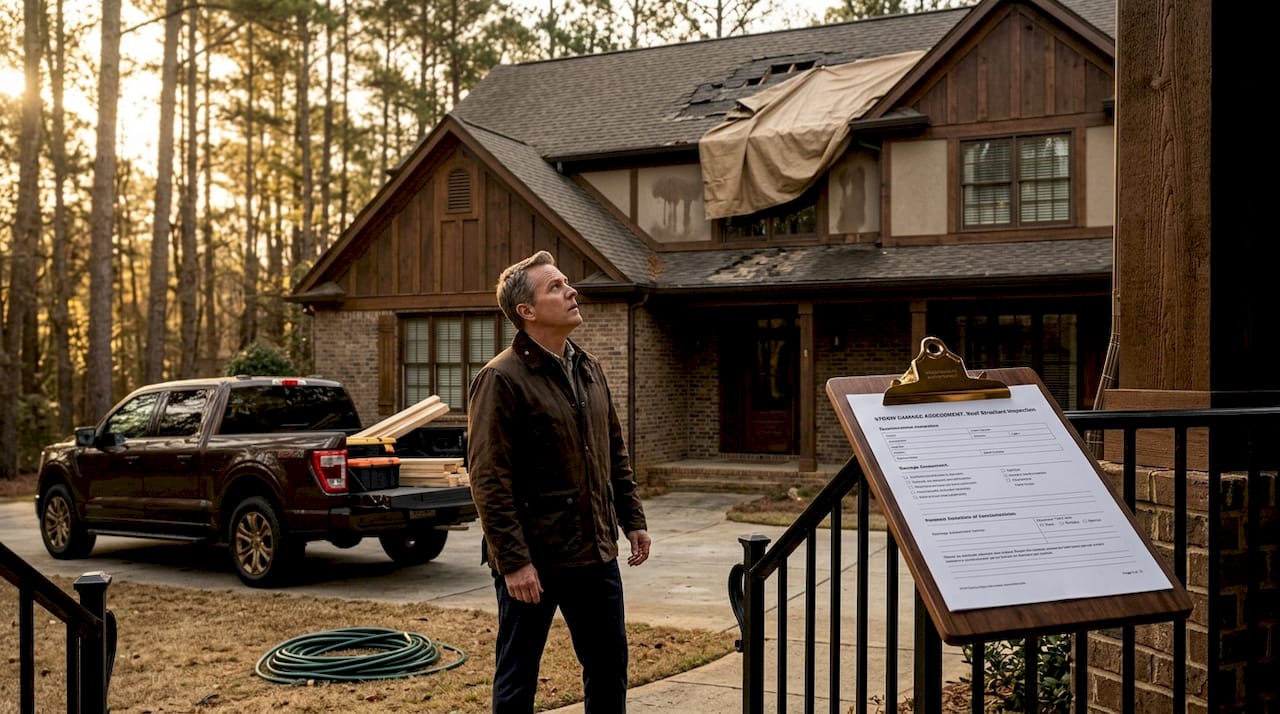
A major storm just rolled through North Georgia, and now you’re standing in your yard staring at missing shingles, damaged gutters, or worse. The storm is gone, but your problems are just beginning. Filing a roofing insurance claim feels overwhelming, especially when you’re already stressed about protecting your home and family. We’ve put together this practical, step-by-step guide to help you move through the process with confidence, avoid the most common mistakes, and get the coverage you’re entitled to.
Table of Contents
- Before you file: What to do immediately after storm damage
- Gathering documentation and understanding your policy
- Filing your claim: Step-by-step process for North Georgia homeowners
- What to watch for: Common mistakes and how to handle denied or delayed claims
- A roofing expert’s perspective: What most guides don’t tell you
- Need roofing claim help? Get professional support now
- Frequently asked questions
Key Takeaways
| Point | Details |
|---|---|
| Act quickly after storm | Document all roof damage and contact your insurer promptly to start the claim. |
| Gather clear documentation | Collect photos, repair estimates, and insurance policy details before you file. |
| Understand policy coverage | Review your policy to know what types of roof damage are covered and any exclusions. |
| Avoid common mistakes | Using licensed contractors and keeping thorough records can prevent claim delays or denials. |
| Know your rights | In Georgia, escalate mishandled claims to the state insurance department for further review. |
Before you file: What to do immediately after storm damage
Now that you know what this guide covers, let’s start with the crucial first steps after a storm hits.
Safety is your first priority. Before you step outside to inspect your roof, scan your property for hazards like downed power lines, standing water, or structural instability. Never climb onto a damaged roof without proper equipment and experience. If the damage looks severe, wait for a professional assessment.
Once it’s safe, document everything before touching a thing. Walk around your property with your phone or camera and record video of every area that shows damage. Take still photos from multiple angles. Capture close-ups of missing shingles, dents in gutters, damaged vents, and any interior signs like water stains on ceilings. This documentation is the foundation of your claim. Insurers rely on visual evidence, and the more thorough you are, the stronger your position.
After documenting, you can make temporary repairs to prevent further damage, such as placing a tarp over a compromised section of roof. Keep every receipt. If you spend money protecting your home before the adjuster arrives, most policies will reimburse those costs as long as you have proof.
Essential items to have ready
| Item | Purpose |
|---|---|
| Smartphone or camera | Document damage with photos and video |
| Notepad or digital log | Record dates, names, and conversations |
| Tarps and roof tape | Temporary weatherproofing |
| Receipts folder | Track repair and material costs |
| Copy of your insurance policy | Reference coverage details quickly |
| Insurer’s contact number | Report the claim immediately |
Contact your insurance company as soon as possible. Most policies require prompt notification after a loss. Delaying can give your insurer grounds to question whether the storm caused the damage or whether neglect played a role. Log the date, time, and name of every person you speak with.
As a homeowner in Georgia, you have real protections. If your insurer mishandles your claim, you can escalate by filing a complaint with the Georgia Department of Insurance. Knowing this upfront puts you in a much stronger position from day one.
Pro Tip: Create a dedicated folder, either physical or digital, for your claim. Store every photo, receipt, estimate, and piece of correspondence in one place. Organized homeowners get faster resolutions.
Our step-by-step claims guide goes deeper on what to expect during this early phase. And if your roof needs attention right away, our guide to repairing storm damaged roof covers temporary and permanent repair options.
Gathering documentation and understanding your policy
With immediate steps covered, let’s discuss how to prepare the paperwork and policy details that ensure a smooth claim.
Good documentation is what separates a fast, fully paid claim from a drawn-out dispute. You need to compile a complete record before your adjuster arrives.
Required documentation checklist
- Photos and videos of all visible damage, taken as soon as it’s safe
- Receipts for any emergency or temporary repairs you’ve made
- Written estimates from at least one or two licensed roofing contractors
- A communication log noting every call, email, or letter to your insurer
- Your insurance policy with the declarations page and coverage summary
- Weather records confirming the storm date and severity in your area (your county’s emergency management site or local news archives can help)
- Any previous inspection reports or maintenance records showing your roof’s condition before the storm
Once your documents are assembled, sit down with your policy. The three sections that matter most are:
- Deductible: The amount you pay before coverage kicks in. Some Georgia policies have separate wind or hail deductibles that are higher than your standard deductible.
- Covered events: Most standard policies cover wind and hail damage. Flooding is typically excluded and requires a separate flood insurance policy.
- Exclusions: Watch for language about “wear and tear,” “lack of maintenance,” or “pre-existing conditions.” Insurers sometimes use these clauses to deny claims.
Pro Tip: If your policy language is confusing, call your agent before you file. Ask them to walk you through exactly what is covered for storm damage. Get their explanation in writing if possible.
One detail many homeowners overlook is verifying that your roofing contractor is properly licensed and insured. Insurers are more likely to accept claims tied to work done by licensed roofing contractors. An unlicensed contractor can actually put your claim at risk if their work doesn’t meet code.
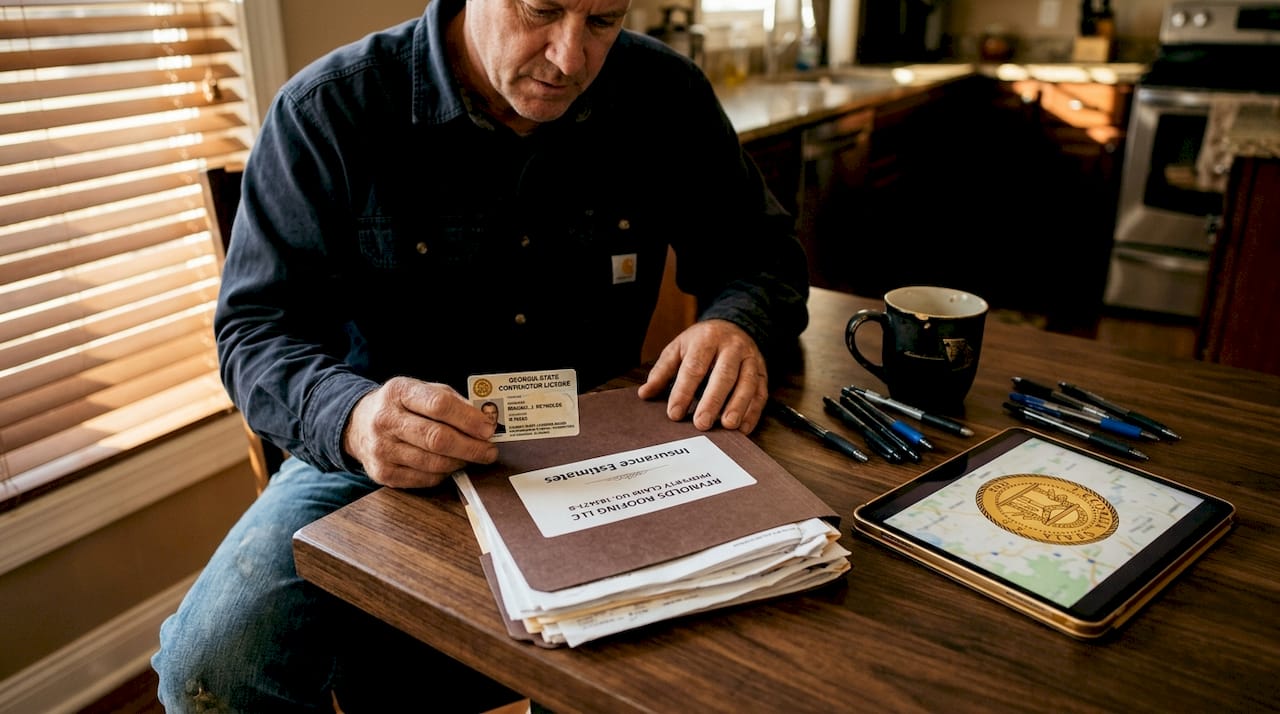
Review the Georgia insurance essentials we’ve compiled to understand how North Georgia policies typically handle roof damage after severe weather.
Filing your claim: Step-by-step process for North Georgia homeowners
Once your documentation is in order, you’re ready to file the insurance claim. Here’s how to make sure you follow all the right steps.
The claim filing process
- Notify your insurer. Call your insurance company’s claims line or file online. Provide your policy number, the date of the storm, and a summary of the damage. Ask for a claim number immediately.
- Schedule the adjuster inspection. Your insurer will assign an adjuster to inspect your property. Request a specific appointment time and plan to be home. Have your documentation ready to share.
- Get your own estimate. Before or shortly after the adjuster visits, get a written estimate from a trusted, licensed local roofer. This gives you an independent number to compare against the insurer’s assessment.
- Review the adjuster’s report. Once the inspection is complete, you’ll receive a written summary of the damage and the proposed payout. Review it carefully. Compare it line by line against your contractor’s estimate.
- Negotiate if needed. If the insurer’s estimate is lower than your contractor’s, push back with supporting documentation. You have the right to dispute the amount.
- Receive payment and begin repairs. Once approved, your insurer will issue payment. Some policies pay in two stages: an initial check and a final check after repairs are verified complete.
Filing method comparison
| Method | Pros | Cons |
|---|---|---|
| Direct insurer filing | Fast, no third party involved | You manage all negotiations alone |
| Agent-assisted filing | Your agent guides the process | Agent’s loyalty is split |
| Licensed contractor assistance | Expert documentation and negotiation support | Requires choosing the right contractor |
Working with an experienced local roofer who understands the storm damage claims process gives you a real advantage. They know what adjusters look for and how to present damage accurately and completely.
If your claim is denied, delayed, or underpaid: Georgia law requires insurers to acknowledge your claim promptly and handle it in good faith. If you believe your insurer is stalling or treating you unfairly, you can file a formal complaint with state regulators. This is a legitimate and effective tool. Don’t wait months hoping the situation improves on its own.
Choosing an insured roofer also protects you from liability if a worker is injured during repairs, which is an often-overlooked but serious risk.
What to watch for: Common mistakes and how to handle denied or delayed claims
Filing is only part of the journey. It’s just as important to know how to overcome obstacles that may arise.
Common mistakes homeowners make
- Incomplete documentation: Skipping photos or failing to record minor damage can give insurers grounds to question the full extent of your loss.
- Missing deadlines: Most policies have strict time limits for filing claims after a storm. Missing them can result in automatic denial.
- Making major repairs before the adjuster visits: Temporary repairs are fine and encouraged, but replacing large sections of your roof before the adjuster inspects can erase the evidence insurers need.
- Hiring unlicensed contractors: Some homeowners choose the lowest bid without checking credentials. Using an unlicensed contractor can void claim payments and expose you to additional liability.
- Accepting the first offer without review: The adjuster’s initial estimate is not always the final word. Many homeowners don’t realize they can and should negotiate.
- Not keeping a communication log: Without dated records of every conversation, it becomes very difficult to dispute an insurer’s version of events.
Know your rights. Georgia consumer protections for claims handling give you real options if things go wrong. If your insurer denies your claim without a clear reason, delays your payment unreasonably, or pays significantly less than the damage warrants, contact the Georgia Department of Insurance. They can investigate and compel action.
Failing to escalate an unresolved issue is one of the biggest risks we see homeowners take. The longer a dispute sits, the harder it becomes to gather fresh evidence and the more leverage you lose. Act quickly and document everything.
Understanding whether you need a full replacement or targeted repairs can also affect your claim outcome. Our breakdown of repair vs. replacement mistakes covers what adjusters look for when making that determination.
If a full replacement is warranted, our roof replacement guide explains exactly how that process works from inspection through final installation.
A roofing expert’s perspective: What most guides don’t tell you
Most insurance guides focus on the steps. Follow this list, submit that form, wait for a check. But after years of helping North Georgia homeowners recover from storms, we’ve learned that the real difference between a smooth claim and a frustrating one comes down to three things that almost no one talks about.
First, adjusters are not your enemy, but they respond to clarity. When you show up to an adjuster inspection with organized photos, a written contractor estimate, and a clear summary of the damage, you make their job easier. That matters. Adjusters handle dozens of claims at a time. The homeowners who communicate clearly and present clean documentation consistently get faster, fairer results. The ones who are vague, disorganized, or aggressive tend to hit delays.
Second, written agreements are not optional. We’ve seen homeowners lose thousands of dollars because a contractor promised something verbally and then delivered something entirely different. Every agreement you make, with your insurer and with your roofer, should be in writing and signed before any work begins. Log every call with a date, a name, and a short summary of what was discussed. This habit protects you more than any single piece of advice we can offer.
Third, the most overlooked factor in any claim is your contractor choice. Hiring a local, experienced, fully licensed roofer is not just about getting quality work. It directly affects whether your claim is accepted and at what value. Insurers recognize licensed contractors. Their estimates carry weight. An unlicensed or out-of-state crew that swoops in after a major storm can create documentation that doesn’t align with local code requirements, which opens the door for claim disputes and underpayments.
We see this pattern repeatedly. A homeowner saves a little money upfront by hiring an unknown crew, and then spends months fighting their insurer over a botched estimate. Compare that to homeowners who use local, trusted, licensed professionals. Their claims move faster, their payouts are higher, and their repairs hold up longer.
Our roof repair insurance tips go into more detail on how contractor selection directly influences claim outcomes. The choice you make at that stage shapes everything that follows.
Need roofing claim help? Get professional support now
Navigating an insurance claim after storm damage is stressful enough without doing it alone. At Infinity Roofing GA, we specialize in exactly this. Since 2018, we’ve helped North Georgia homeowners get fast, fair outcomes on their insurance claims, whether for repairs or full replacements.

We walk alongside you through every step: damage documentation, estimate preparation, adjuster coordination, and final repairs using premium materials and licensed craftsmanship. Our storm damage repair team is ready to respond quickly, and our step-by-step claims assistance service means you never have to figure out the paperwork alone. If you’re in the greater Atlanta area, our Atlanta roofing support team is standing by. Contact us today for a free inspection and let us handle the heavy lifting so you can focus on your family.
Frequently asked questions
What if my roofing insurance claim is denied in Georgia?
You can escalate by filing a complaint with the Georgia Department of Insurance if your claim is denied, delayed, or underpaid. Georgia law requires insurers to handle claims in good faith.
How soon after a storm should I file a roofing insurance claim?
File your claim as soon as you safely can and after documenting all damages, preferably within a few days of the storm event. Most policies have strict deadlines, and delays can give insurers reason to question the cause of damage.
Does using a licensed roofer affect my insurance claim?
Yes, using a licensed roofer significantly improves your claim’s acceptance rate by ensuring all repair estimates and work meet insurer and local code requirements. Unlicensed work can trigger disputes or denial.
What documents do I need when filing a roof damage insurance claim?
You’ll need photos, videos, receipts for temporary repairs, a written contractor estimate, a communication log, and your policy’s declarations page to build a complete and credible claim.
Can I handle temporary roof repairs before the adjuster comes?
Yes, and in fact your policy likely requires you to prevent further damage. Just photograph all damage thoroughly first and keep every receipt from any temporary work performed.