After a hailstorm tears through Paulding or Cherokee County, the last thing you want is confusion about who to call. Most homeowners use “roofer” and “roofing contractor” interchangeably, but these are two different roles with very different responsibilities. Getting this wrong can stall your insurance claim, void your warranty, or leave you with repairs that don’t meet local code. This guide breaks down both terms, compares them clearly, and tells you exactly when and why a licensed roofing contractor is the right call for your home.
Table of Contents
- What does a roofing contractor do?
- Roofing contractor vs. roofer: Key differences
- When should you hire a roofing contractor?
- What reputable roofing contractors offer
- The uncomfortable truth most homeowners miss about hiring roofing contractors
- Connect with trusted roofing contractors for your North Georgia home
- Frequently asked questions
Key Takeaways
| Point | Details |
|---|---|
| Contractor vs. roofer | Roofing contractors manage projects and compliance, while roofers focus on hands-on installation and repair. |
| Why choose a contractor | For storm repair, insurance claims, and major projects, contractors provide documentation, warranties, and code alignment. |
| Check credentials | Always verify a contractor’s license, written scope, and warranty details before hiring. |
| Insurance claim support | Contractors help navigate inspection, estimates, and repair work to meet your insurer’s standards. |
What does a roofing contractor do?
A roofing contractor is not just someone who climbs on your roof. The term refers to a licensed business entity that manages an entire roofing project from start to finish. That includes pulling permits, hiring and supervising workers, handling documentation, coordinating material orders, and ensuring every phase of the job meets local building codes.
A roofer, by contrast, is the skilled tradesperson doing the physical work. They install shingles, apply underlayment, seal flashing, and handle the hands-on tasks that keep water out of your home. Roofing workers physically install materials, while contractors are the licensed business managing the overall project. Both roles are essential, but they serve very different functions.
Here’s what a roofing contractor typically handles on a residential project:
- Licensing and insurance: A legitimate contractor carries a valid state license and general liability coverage, protecting you from financial exposure if something goes wrong on the job.
- Permit management: For major repairs or full replacements, permits are often required. The contractor handles this process so you don’t have to.
- Project supervision: They oversee the roofers doing the physical work, ensuring quality and code compliance throughout.
- Insurance coordination: Contractors document damage, write scopes of work, and communicate directly with your insurance adjuster.
- Warranty administration: They provide workmanship warranties and help register manufacturer material warranties on your behalf.
A licensed contractor is your single point of accountability. If something goes wrong after the job is done, you know exactly who to call.
For North Georgia homeowners specifically, working with licensed roofing contractors is especially important because Georgia’s building codes and insurance requirements are specific. A contractor who knows Paulding County permit requirements or Cobb County inspection protocols will save you real time and money.
Roofing contractor vs. roofer: Key differences
To see this more clearly, let’s put both roles side by side. Understanding who does what helps you ask the right questions when you’re getting bids or talking to your insurance company.
| Factor | Roofer (tradesperson) | Roofing contractor (business) |
|---|---|---|
| Primary role | Physical installation and repair | Project management and compliance |
| Licensing | Not always required individually | Required at the business level |
| Insurance | Not typically required | General liability and workers’ comp |
| Permit handling | No | Yes |
| Insurance claims | No | Yes |
| Written estimates | Rarely | Standard practice |
| Warranties provided | No | Workmanship and materials |
| Code knowledge | Basic | Thorough and current |
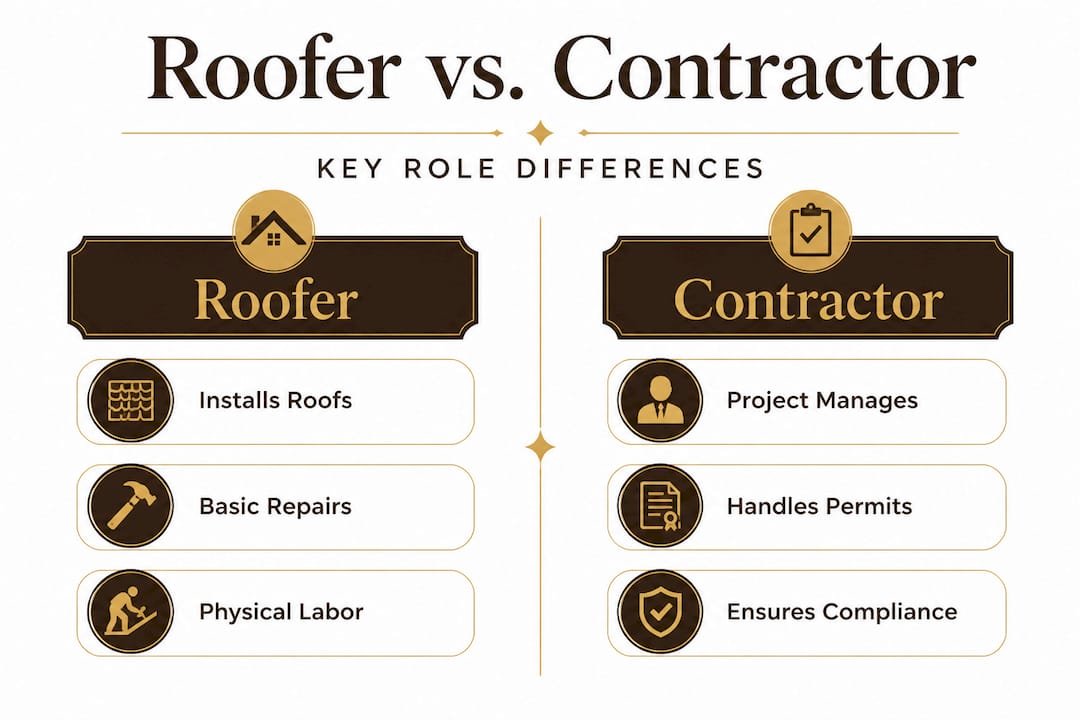
The biggest takeaway from this table: if you need work done that involves an insurance claim, building permits, or formal documentation, you need a licensed business managing the project. A roofer alone simply doesn’t have the infrastructure to handle those requirements.
When is a roofer (without a contractor structure) appropriate?
- Patching a very minor leak in an area with no structural concern
- Basic maintenance work like clearing debris from valleys
- Simple cosmetic repairs that don’t require permits
When you definitely need a roofing contractor:
- Storm damage assessment and repair: Any time wind, hail, or falling trees cause damage, a contractor’s documentation is critical for your claim.
- Full or partial roof replacement: These projects require permits in most North Georgia jurisdictions.
- Insurance-driven repairs: Your insurer will want a licensed contractor’s scope of work, not a verbal quote from a tradesperson.
- Complex repairs involving multiple systems: Flashing, gutters, skylights, and ventilation often intersect during major repairs.
For guidance on when repair crosses into replacement territory, our repair or replacement guidance breaks down the specific thresholds North Georgia homeowners should know.
When should you hire a roofing contractor?
Now that the difference is clear, here’s a practical breakdown of situations that call for a contractor specifically.
1. After any storm event
North Georgia gets hit hard by severe weather. Hailstorms, wind events, and heavy rains all create roof damage that may not be obvious from the ground. A contractor will conduct a thorough inspection, identify hidden damage, and create documentation that holds up with your insurance company. Without that step-by-step process, claims get denied or underpaid.
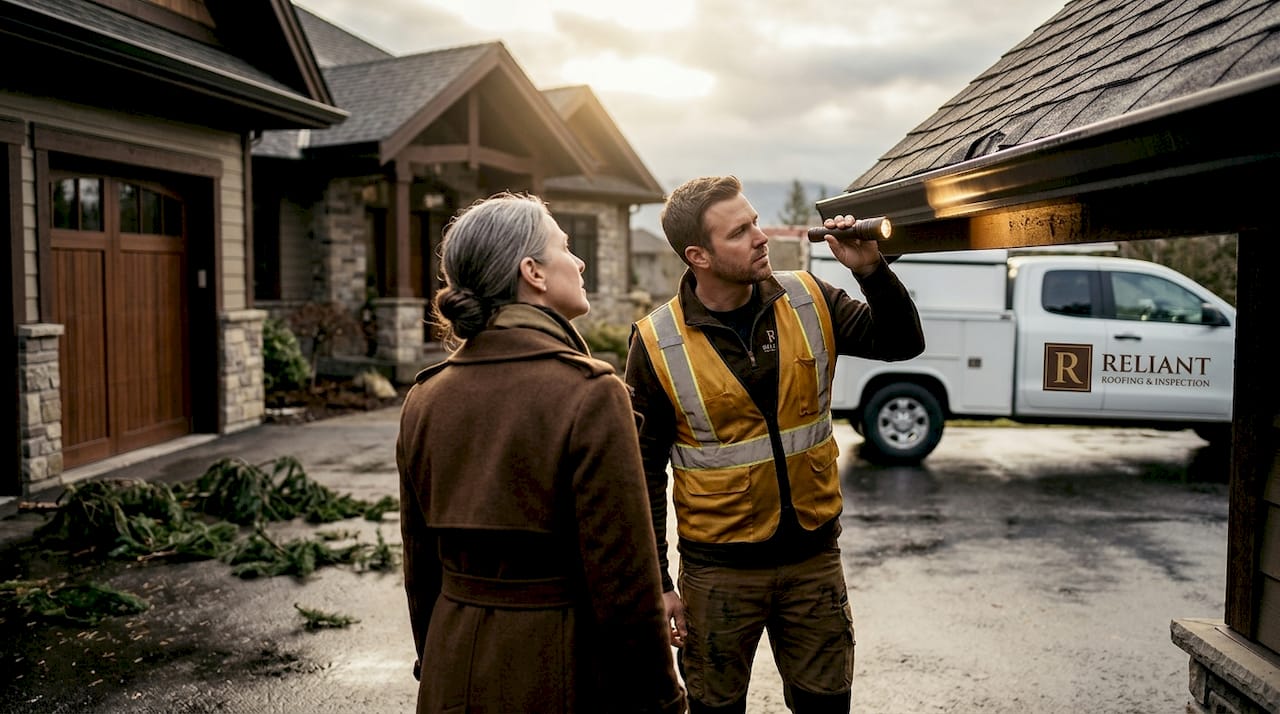
Following the storm repair step-by-step process is something we walk our clients through regularly, and having a contractor who knows the exact documentation an adjuster needs makes all the difference.
2. When you’re filing an insurance claim
This is the single most important scenario for hiring a contractor over a roofer. Insurance companies require written scopes and estimates along with documentation of damage, and they expect the work to meet local code. A roofer alone cannot provide what’s needed to support a claim.
3. For roof restoration projects
Restoration work, which typically involves cleaning, recoating, resealing, and making targeted repairs rather than full replacement, requires a contractor with specific expertise. Our roof restoration guide explains what this process looks like in detail.
4. For any project requiring a permit
If your local jurisdiction requires a permit for the work, only a licensed contractor can pull it. Performing work without a required permit can cause serious problems when you sell your home or file a future claim.
5. Routine inspections and preventive maintenance
Even for maintenance, a contractor’s inspection is more thorough. They’ll identify early warning signs, check flashing integrity, evaluate gutter attachment points, and give you a written report. This is far more valuable than a visual check by a non-licensed worker.
Pro Tip: Ask any contractor you consider for their license number, proof of general liability insurance, and at least two local references before you agree to any work. This 60-second check protects you from significant financial risk.
What reputable roofing contractors offer
A truly reputable roofing contractor brings a lot more to the table than just labor. Here’s a breakdown of what you should expect when working with a quality contractor:
| Service | What it means for you |
|---|---|
| Professional inspection | A detailed written report of your roof’s condition with photos |
| Written scope of work | Clear documentation of what will be done, what materials will be used, and why |
| Itemized estimate | No surprise costs. You know exactly what you’re paying for. |
| Workmanship warranty | Protection if the installation itself fails after the job |
| Material warranty | Coverage from the manufacturer on shingles and other products |
| Code compliance | Repairs that meet local building standards so your permit passes inspection |
| Insurance claim support | End-to-end help with documentation, adjuster meetings, and approvals |
Written estimates and warranty clarity are two of the most critical things homeowners should confirm before signing any contract. These protect you not just during the project, but for years afterward.
Here’s what strong contractors should always provide in writing:
- The full scope of work with materials specified by product and brand
- A timeline for project completion
- Payment terms (never pay 100% upfront)
- Warranty terms for both workmanship and materials
- Their license number and insurance policy details
Getting a fast, accurate estimate before committing is also easier than ever. Our same-day roof estimates process means you don’t have to wait days to understand your options.
Pro Tip: Even if your roof looks fine from the ground after a storm, schedule a professional inspection. Hidden damage to underlayment, decking, or flashing can worsen significantly over time and may still be covered by your policy if reported promptly.
When it comes to licensed repairs and compliance, working with a contractor who genuinely understands Georgia’s building requirements protects your investment and keeps your warranty intact. Cutting corners on this front is never worth it.
The uncomfortable truth most homeowners miss about hiring roofing contractors
We’ve worked with hundreds of homeowners across North Georgia since 2018, and we’ve seen a pattern that’s both common and costly: most people focus on price and speed when choosing a contractor, and they skip the documentation and compliance details entirely.
Here’s why that’s a serious mistake.
When a repair is done without proper code alignment or documentation, it can quietly cause problems for years. Then when a storm hits, you file a claim, and the insurer discovers the prior repair wasn’t permitted or doesn’t meet current code. Suddenly, your claim is complicated or denied. This isn’t hypothetical. We hear this story from new clients regularly.
The same issue affects home resale. Buyers’ inspectors will find unpermitted work. This can delay or kill a sale, reduce your offer price, or force you to redo work that was already paid for. The cost of doing it right the first time is almost always less than fixing a shortcut later.
Our experience with contractor compliance insights confirms that the homeowners who fare best with insurance claims and resale are the ones who treated documentation as non-negotiable from the start.
The practical wisdom here: always confirm three things before any work starts. Get written scopes. Confirm warranty terms in writing. And make sure your contractor has genuine experience supporting insurance claims, not just performing installations. Those three steps protect you more than any single product upgrade ever will.
North Georgia homeowners also tend to underestimate how specific local knowledge matters. A contractor who regularly pulls permits in Bartow County knows what inspectors look for. One who works regularly with Georgia-based insurance adjusters knows how to document damage in a way that supports maximum claim approval. That local expertise has real dollar value.
Connect with trusted roofing contractors for your North Georgia home
When you need roofing help in North Georgia, working with a licensed, local contractor makes the whole process faster, smoother, and less stressful. At Infinity Roofing GA, we’ve been serving homeowners across Dallas, Marietta, Canton, Cartersville, and the surrounding communities since 2018.

Whether you’re starting from storm damage and unsure what to do next, or you just want a professional inspection before problems develop, we’re ready to help. Walk through the storm repair process with a team that handles everything from initial inspection to final sign-off. Our approach to licensed repairs ensures your work meets code and supports your warranty. And if you’re dealing with an active claim, our guide to insurance claim steps shows exactly how we help you get fair coverage. Reach out today for a same-day response and honest answers from your local roofing experts.
Frequently asked questions
Is a roofing contractor required for repairs covered by insurance?
Yes, most insurance companies require licensed contractors for repairs to ensure proper documentation and code compliance. Contractors manage project documentation and compliance requirements that individual roofers typically cannot provide.
What should I look for in a reputable roofing contractor?
Look for inspection and documentation capability, written estimates, clear workmanship and material warranties, and familiarity with local building codes. Best practices include written scopes, warranty clarity, and demonstrated experience with insurance claims in your area.
Can roofers handle maintenance on my home without a contractor?
Roofers can perform basic maintenance and minor repairs, but any work involving permits, insurance claims, or significant structural repairs should always involve a licensed contractor. Roofers focus on hands-on tasks, while contractors handle the compliance and project management side.
How do roofing contractors support the insurance claim process?
They conduct professional inspections, create photo documentation, write scopes of work, and help ensure all repairs meet both insurer and local code requirements. Inspection, documentation, and code compliance are the key benefits that make contractors essential partners in any insurance-driven repair.